
Dog Peeing Indoors: Changes Worth a Vet Check
Record new urinary accidents, thirst changes and related signs in your dog. Learn why a veterinary assessment comes before a supplement recommendation.
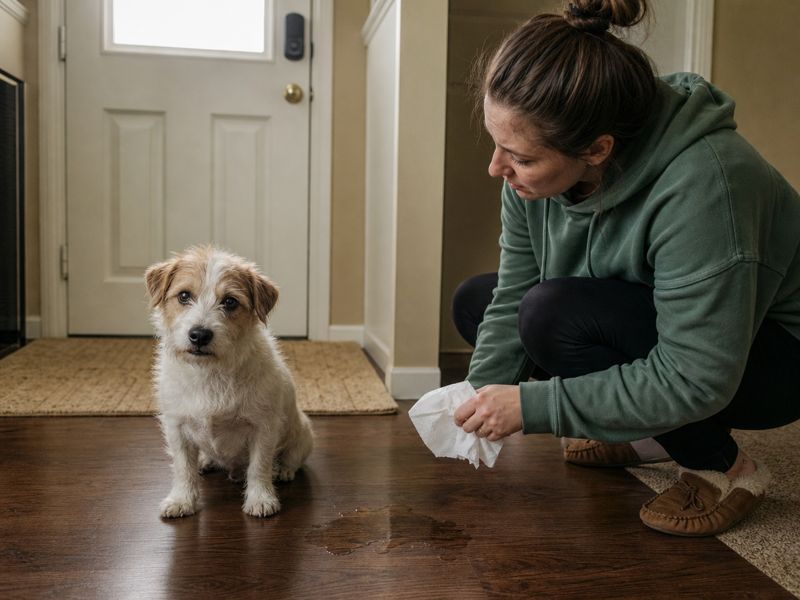
Illustrative photo, not a real customer.
What it can be a sign of
Accidents in the house are one of the most common signs of a urinary tract infection. Others are straining to pee, passing small amounts often, strong-smelling urine, blood in the urine and licking at the area.
Some conditions make infections more likely, including bladder stones, diabetes, Cushing’s disease and kidney disease. That is why this is not one to wait on.
How it connects to the bowl
This is the one problem on our list where the bowl is not the first answer. A vet needs to test a urine sample. What the bowl gives you is evidence: how much your dog drinks, whether that has changed, and whether the food or treats changed recently.
What may be missing or overdone
Note the water bowl. A dog who is suddenly drinking and peeing far more needs a vet check for the conditions above. Note the food as well: the exact name and whether it is wet or dry. Some urinary conditions are managed with a diet your vet prescribes.
What can help
Book the visit and ask whether to bring a fresh urine sample. Keep clean water available at all times and give more chances to go outside. Do not restrict water to prevent accidents.
Urinary support chews, including cranberry ones, are widely sold. The veterinary sources we rely on do not list them as a treatment for an infection. Treat them as something to ask your vet about once the cause is known.
It is rarely just accidents
Straining with little or no urine is an emergency, especially in male dogs. Blood, pain, vomiting or a dog who seems unwell also needs urgent care. Leaking while asleep is a different pattern and worth describing exactly to your vet.