
Senior Dog Slowing Down: Comfort and Mobility
Review changes in an older dog’s movement, comfort and weight, and prepare useful observations for a veterinary discussion about their routine.
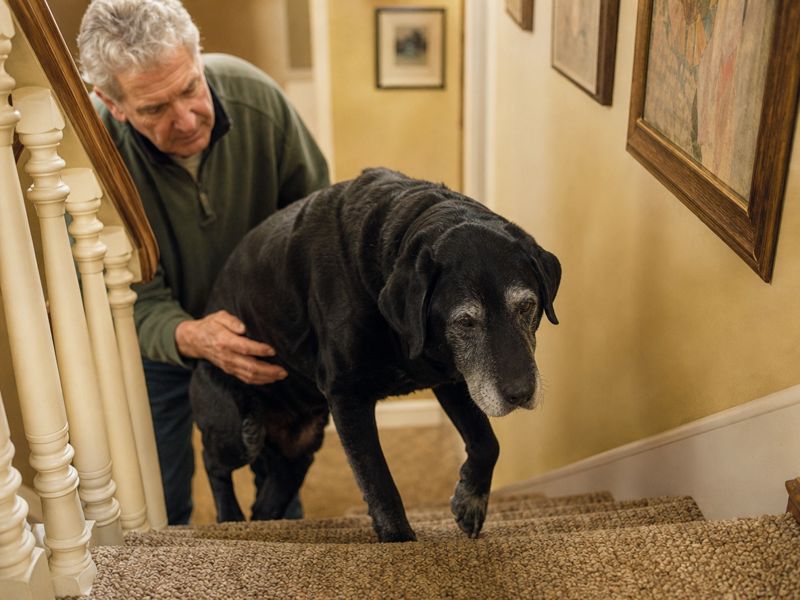
Illustrative photo, not a real customer.
What it can be a sign of
Stiffness after rest, taking the stairs slowly, hesitating before a jump and lagging on walks are common signs of osteoarthritis. It is one of the most frequent causes of long-term pain in dogs, and it creeps in slowly enough that it gets mistaken for age.
Slowing down can also come from other conditions, which is why a senior check with your vet is worth doing.
How it connects to the bowl
Weight is the strongest diet link. Weight control comes first in managing arthritis, because every extra pound is carried by sore joints on every step.
Older dogs also move less, so the same portions that kept them trim at five can make them heavy at ten.
What may be missing or overdone
Overdone: calories, especially from treats and table extras. Missing: in many routines, any source of omega-3 fatty acids or joint support, both of which vets include in arthritis care.
What can help
Get a current weight and ask your vet what a healthy one looks like for your dog. Measure the main food and count the extras. Keep exercise gentle and regular: leash walks and swimming rather than hard sprints. Non-slip rugs and a ramp help at home.
Joint supplements such as glucosamine and chondroitin, and omega-3 fatty acids, are used alongside those steps. They support the plan. They do not replace it.
It is rarely just slowing down
Notice trouble getting up, a changed way of sitting, licking at a joint, irritability when touched, or less interest in play. If your dog is in obvious pain or suddenly much worse, see the vet promptly.