
Why Is My Dog Licking Their Paws?
Learn what persistent paw licking can mean, what to record about your dog’s skin and routine, and which questions to discuss with your veterinarian.
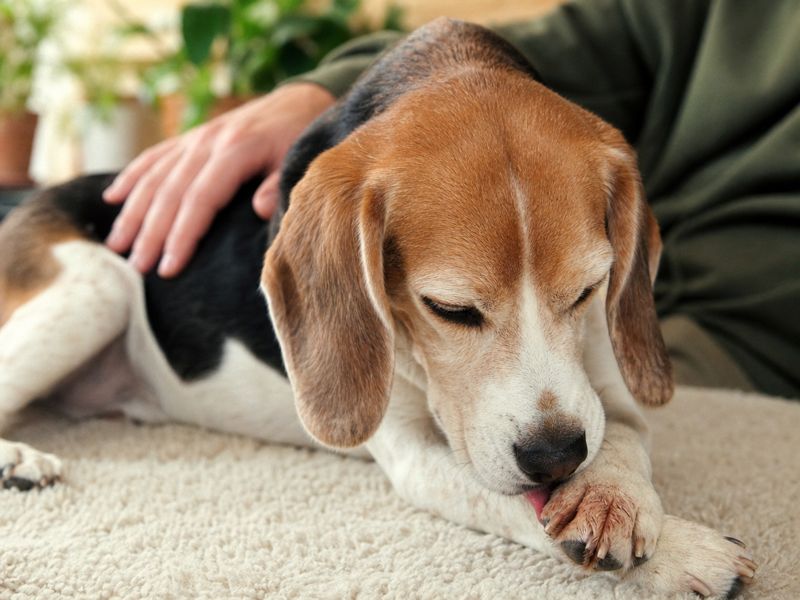
Illustrative photo, not a real customer.
What it can be a sign of
Licking and chewing the feet is one of the classic signs of allergic skin disease in dogs. Dogs with atopic dermatitis often lick their paws, scratch behind the elbows, rub their faces and scoot. The same licking is also common when a yeast or bacterial infection has set in on irritated skin.
Look between the toes. Redness, a sour or musty smell, or fur stained reddish-brown from saliva all mean the licking has been going on for a while.
How it connects to the bowl
Food is one possible cause of an itchy dog, and it is the one owners reach for first. The honest picture is that the cause cannot be read from the paw. Environmental allergy, parasites, infection and food reactions can all look the same at home, and only a vet-guided diet trial can confirm a food reaction.
That is why the bowl matters in two ways. It may be part of the cause, and it is always part of the evidence your vet needs.
What may be missing or overdone
Essential fatty acids are a regular part of how vets manage itchy skin. They rarely work alone and take weeks to show, but many routines have no clear omega-3 source at all.
The other common problem is too much variety. Every treat, chew and topper is another ingredient. If a dog eats six different things a day, nobody can tell which one matters.
What can help
Keep the main food steady and cut the extras down to one or two that never change. Write down when the licking happens: after walks, at night, in a certain season. Ask your vet whether an omega-3 source makes sense for your dog.
Do not switch foods again and again on your own. Each switch erases the history a vet would use.
It is rarely just the licking
Paw licking usually travels with other signs: ear scratching, face rubbing, scooting, red skin or thinning hair. Licking one paw only, or licking together with a limp, can mean pain in that leg and needs a vet. So does broken skin, swelling or a bad smell.